The food decision on an event plan usually arrives as a blank line: catering, and a number. Two routes fill that line. Full-service catering brings kitchen, staff and furniture into almost any room and leaves it clean after. The restaurant buyout takes the event to a working kitchen, closes the doors to the public and serves from the source. Both feed the same people; everything else about them differs, and the differences are worth a table before the deposit is signed.
The comparison at a glance
| Criterion | Full-service catering | Restaurant buyout |
|---|---|---|
| Cost per head | Mid to high, plus room and rental | Fixed menu price, rooms often free |
| Location freedom | Any hall, courtyard or empty floor | One room, the restaurant's own |
| Timing control | Exact, down to the canape round | Anchored to the kitchen's rhythm |
| Dietary handling | Written into the contract | Negotiated with the chef, person to person |
The table hides one asymmetry worth naming: catering is a product built for events, while a buyout is a product borrowed from a business that usually serves the public. That single fact explains most of what follows.
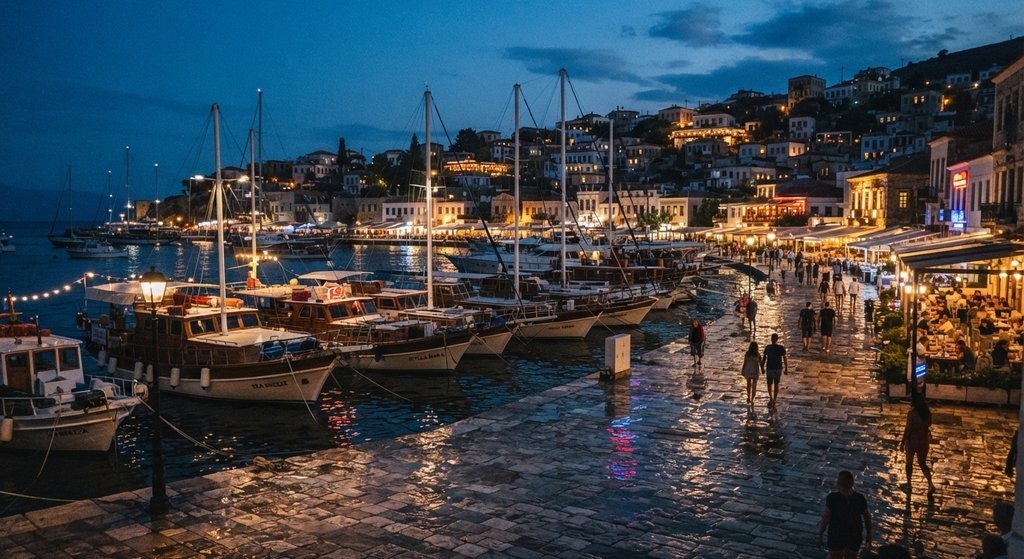
Cost
Itemized, catering reads expensive: food, staff hours, rentals, delivery, and the room itself billed separately. A buyout collapses that stack into a per-head menu price, and for groups past roughly sixty guests the buyout often lands cheaper for the same three courses. The caterer's advantage reappears at scale. A single kitchen cooking for four hundred off-site strains, while a catering operation is built to duplicate itself across rooms. Below about forty guests, the buyout's minimum-spend clauses start to bite and the maths swings back the other way.
Two line items confuse the comparison and deserve unpacking. Catering bills staff separately, and the team for a proper dinner, chefs, servers, a floor captain, can equal the food itself; a buyout bills none of that because the team is salaried already. Conversely, buyouts charge the room indirectly, through minimum spends negotiated per evening, and an event that wants the whole house, back rooms included, pays for space a caterer would never have needed. Read both contracts down to those two lines and the real gap is usually smaller than either quote suggests.
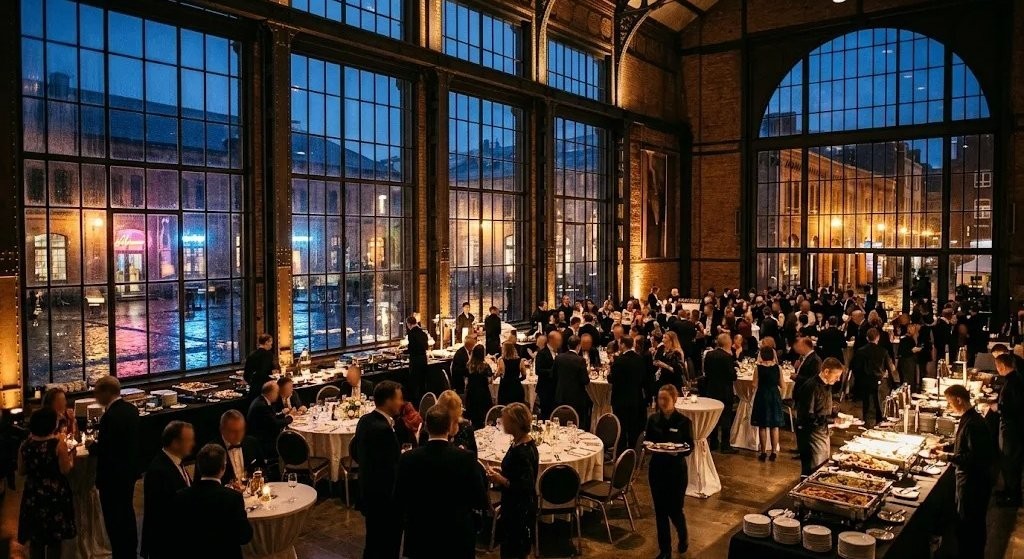
Logistics
This is where the routes truly separate. Catering can make a ballroom, a gallery, a tent or an unfinished sixth floor serve dinner, and it carries everything but the walls: ovens on wheels, glassware, tables, the wet-bar that makes a courtyard work in August. The buyout carries nothing because everything is already installed, which is why it feels effortless. The price of that effortlessness is fixed geometry. Seating follows the restaurant's plan, speeches wait for the pass, and the finish time bends toward the kitchen's Tuesday habits even on a Thursday.
Load-in decides more catering outcomes than the menu does. A caterer needs an hour to build a kitchen in an empty room, freight access, power and a place to wash, and venues that cannot offer those three things quietly cap what catering can deliver. A buyout needs nothing but the guests, which is why it shines for groups arriving straight from a conference hall: walk in, sit down, eat. The cost of that simplicity returns at the other end, since a buyout ends when the kitchen closes and a catered room can run to whatever hour the contract names.

Impression and risk
A buyout delivers the stronger story. Guests eat where the city eats, the chef appears at the pass, and the evening feels found rather than produced. Catering delivers the stronger control: the same menu in the same minute in four rooms, dietary cards printed, the canape round timed to the speaker who always runs late. The risks mirror each other. Catering's risk is logistical, a late van, a cold course; the buyout's risk is personal, a kitchen whose owner sells the business or falls ill between signing and serving. Contracts differ accordingly, and the booking-season guide matters here twice, because good restaurants sell out their good weeks a year ahead.
One more impression criterion separates the routes quietly: consistency. A catered dinner tastes the same at table forty as at table four, because one kitchen plated it. A bought-out restaurant serves the same menu through its own stations, and at the far corner of a full house the differences show. Neither is a defect; they are just different promises, and the event's story should pick which promise it wants kept.
Who each route fits
- Full-service catering fits unusual venues, multi-room programmes, precise schedules and menus with heavy dietary mapping.
- The buyout fits groups of thirty to one hundred and fifty, food-led events, and budgets that want one number per head.
- Both fit the same week more often than planners expect: buyout for the celebration dinner, catering for the working days.
The arithmetic of the exception is worth writing out. Morning events fail at bought-out restaurants because kitchens staff for lunch, not for eight in the morning, and breakfast catering is its own small industry precisely for that reason. Evening speech deadlines fail for the mirror reason: a dining room's rhythm bends around dessert, and dessert bends around the kitchen. Control of the clock is what the catering fee truly buys.
The verdict
Choose catering when the venue is unusual, the schedule is exact or the guest count runs past a single kitchen's capacity, and treat the higher invoice as the price of control. Choose the buyout when the event is food-led, the group fits one dining room and the menu is the memory you are buying. The exception is timing: if the event starts before eleven in the morning or the speeches must end by ten in the evening, hire the caterer regardless of everything else, because borrowed kitchens keep borrowed hours, and no menu survives a kitchen that opens when it opens.