The tram was late on the first morning of April because a chestnut branch had come down overnight across the line in the Rossau. The driver stepped out, dragged it to the verge with both hands, and a woman in the front seat said through the open door, "That is spring for you, it cleans up after itself." By the time we reached the Ring the pavements were already dry, and the plane trees had that first-week green that lasts about nine days.
April, the city warming up
That week the city felt like it was being rehearsed before the real season opened. Museums were quiet enough that the guard in the fish-gallery room had time to point out which frame had been re-cut. A cafe on the Josefstaedter Strasse still had tables out but only on the sunny side, and the waiter moved them twice in an hour to follow the light. Prices were spring prices, not yet summer ones. One guide, waiting for a group that had not arrived, shrugged: "Everything works in April. The tourists have not noticed yet."
The receipts from that week came out lower than expected, and not just on rooms. Two dinners at Beisln needed no booking, the museums sold tickets at the door, and a Danube canal walk cost nothing but the wind. A planner colleague had warned that April is a rehearsal month with rehearsal gaps, scaffolding on one facade, a gallery floor closed for waxing. The gaps turned out to be part of the charm: the city at half volume is easier to hear.
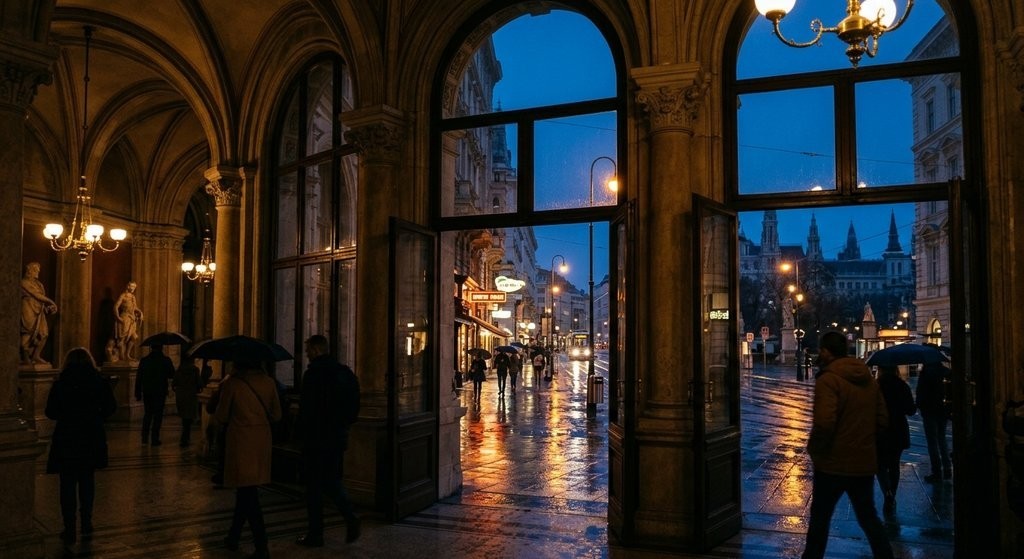
August, and the city half-closed
The second week was August, and it began with an argument between two Danish tourists and a hotel receptionist about a fan. "The compressor is broken since June," the receptionist said, not unkindly, "the part is coming, it is always coming in August." The city was hot, slower, and oddly private. Locals had left, half the good Beisln were shuttered with notes on the door, and the tourists had the place to themselves. The markets stayed open and generous. At the Naschmarkt a cheese seller gave a tasting of anything you asked about and asked nothing in return, because, she said, August customers are the ones who come back in October.
Service ran at August speed everywhere, which read as rudeness for a day and then as honesty. Trams came every eight minutes instead of four, the museum cloakrooms closed for staff holidays, and the famous cake queue shrank to a stroll. What the week proved most clearly was the pricing: rooms that cost triple in June sold at half rate, and the money saved bought the best dinner of the whole year's travel.
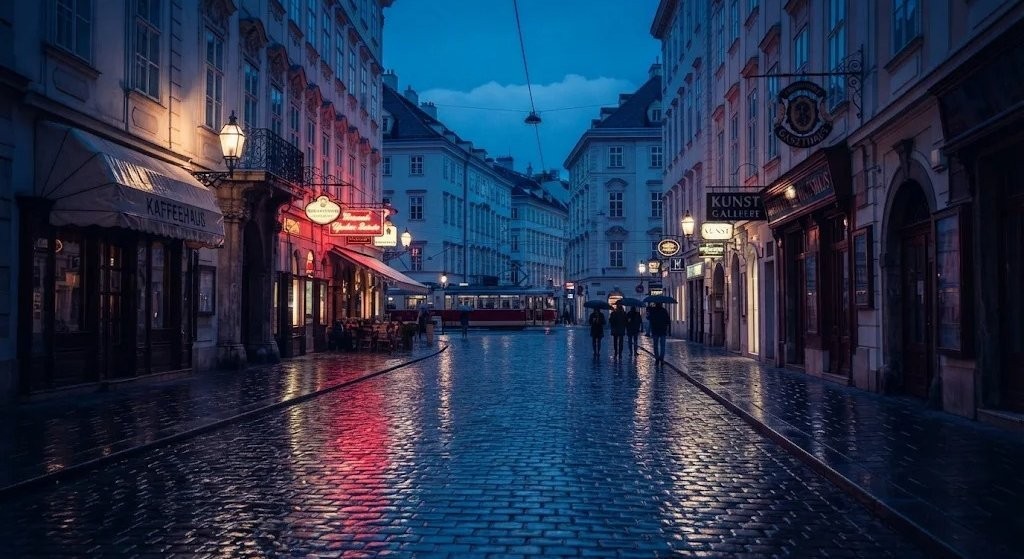
December, four weeks of collected noise
The third week was Advent, and the difference hit at the door of the aircraft. The queue for the city trains at the airport station had a choir in it, rehearsing. The squares smelled of punched pancakes and burnt sugar, the big tree on the Rathausplatz was lit like a chandelier, and every cafe had a queue with a list in it. A waiter we had met in April, now serving five tables deep, laughed at the memory: "In April you had the room. Now the room has you." Gluehwine prices had climbed past five euros at the prettiest stands, and the prettiest stands knew it.
The Advent week also carried its own logistics tax, worth writing down. Every cafe needed a reservation, every market stand had a queue with a shape to it, and the distance between two squares doubled because the crowds walked at souvenir speed. Budgeting in December means adding twenty percent to everything except the weather, which is free and cold. The light, though, was worth the surcharge: by four in the afternoon the whole city was lit, and the photographs took themselves.
What the three weeks added up to
The comparison, written down on the flight home, came out like this:
- April: everything open, nothing crowded, light that flatters stone, the best month for walking and looking.
- August: cheapest rooms, slowest service, a city on reduced power, good for people who like a place to themselves.
- Advent: the city at full voltage, expensive and beautiful, worth it only if crowds are part of the plan.
None of the three weeks settled the question on its own. The April tram driver, the August cheese seller and the December waiter each thought their month was the normal one, and each was right. What the notes do settle is the method: pick the season for what you want the days to feel like, then check the booking calendar afterwards, because in the busy weeks the calendar, not the weather, is what closes doors. The chestnut branches come down in April. The choir sings in December. Somewhere between the two, the right week is waiting, and it will not announce itself.