Two ways to walk into a venue inspection exist, and most planners carry evidence of both. The full kit is the professional's answer: measuring tape, printed plans, camera, tablets of notes, spare chargers, water, plasters. The light daypack is the minimalist's answer: phone, notebook, one pen, trust the venue. Between a February basement inspection and a July rooftop tour, the argument changes shape, so it is worth putting the two kits side by side before the next visit is booked.
The comparison at a glance
| Criterion | Full working kit | Light daypack |
|---|---|---|
| Weight carried | 4 to 6 kg on the shoulder | Under 1.5 kg |
| Data captured | Plans annotated, rooms measured | Photos and voice notes only |
| Speed of visit | 60 to 90 minutes per venue | 25 to 40 minutes per venue |
| Back at the desk | Everything verified on site | Gaps filled by mail, days later |
The table reads as if the heavy kit always wins, and it does win in one specific place: the first visit to a venue that is shortlisted for a contract. For everything else, the maths is closer than it looks.

Cost
The kit itself is cheap in money and expensive in friction. Tape, laser measure and a folder of plans cost less than a dinner, and they last years. The real cost is time: a measured visit takes twice as long as a photographed one, and a day with four venues can end at six in the evening instead of three. The daypack's cost runs the other way. It is free on site and it charges later, because every unmeasured doorway becomes a mail to the venue, and mails come back at the venue's speed, not yours.
Comfort across the seasons
Winter visits favour the heavy kit, oddly, because buildings are warm and coats come off, and a measured hour in a T-shirt beats a rushed one in gloves. Summer flips it. July site tours through un-air-conditioned ballrooms punish anything heavier than a phone, and the rooftop inspection at midday is survived, not enjoyed, with a full pack. Spring and autumn are neutral. The practical rule that came out of a year of this: carry the kit when the visit decides a contract, carry the daypack when the visit only ranks a long list. The season guide for venue bookings matters here more than the packing list does.
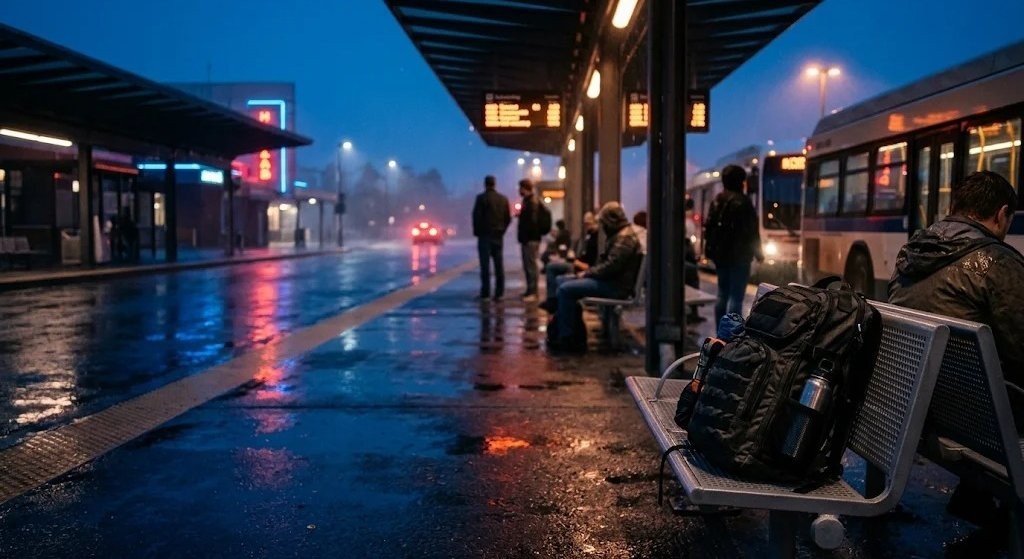
Two details decided more comfort than any list. Footwear mattered first: site visits walk farther than their schedules claim, through loading corridors and mezzanines that appear on no floor plan, and one summer day added three kilometres of concrete to an itinerary sold as four short tours. Weatherproofing mattered second. A February courtyard inspection in drizzle and a July rooftop in full sun both punished the unprepared in different currencies, and the bag that carried one spare layer and a folded cap handled both without complaint.
Efficiency and what each kit misses
The full kit answers questions before they are asked. Ceiling height at the low beam, door widths for the staging case, socket positions behind the pillar: measured once, believed forever. The daypack answers none of these, and its photos flatter rooms in ways floor plans do not correct. What the heavy kit misses is equally real: it slows conversation. Sales managers open up in a walked-and-talked visit, and a person with a laser measure in one hand and a phone in the other has no free hand for the coffee that makes the second hour honest.
The daypack has one efficiency the heavy kit cannot match, and it is worth naming: questions. A visitor with empty hands asks the sales manager about ceiling loads, about the neighbour below, about last year's failures, and the answers arrive in sentences rather than measurements. Half the intelligence gathered in a year of visits came from those conversations, not from the tape.
Who each kit fits
- The full kit fits contract-deciding visits, first meetings with venues, and anyone negotiating room rates against floor plans.
- The daypack fits first-pass ranking visits, return visits to known rooms, and days with four or more venues on the list.
- Both fit the same week if the week is planned honestly: heavy mornings, light afternoons, and the laser measure stays at the hotel on the fast days.
The kit, packed honestly, weighs less each year as equipment shrinks: a laser measure the size of a lighter, a phone camera better than the dedicated one, plans on a tablet. The four kilograms quoted in the table are the old kit. The modern version travels at two, which narrows the daypack's case to speed alone.
The verdict
Carry the full kit as the default, and cut it down to the daypack under one exception: when the visit's outcome is a ranking rather than a decision. The kit earns its four kilograms exactly once per venue, on the visit that turns a shortlist into a signature, and every other visit is just faster without it. Pack for the decision, not for the walk.